Dr. Thomas Rau, M.D.
Author of the underlying biological signal framework on which the AMSEL Index operates. Medical Director, BioMed Center Sonnenberg. Pioneer of Swiss Biological Medicine.
Forty years of operating practice. A reference cohort exceeding 50,000 documented cases. Direct institutional authority over signal definition, cross-system interaction logic, and threshold calibration — the three calibration sources the framework runs on.
Forty Years of System Construction
The credentials below are not biographical detail. They define the institutional source from which the framework's calibration is drawn.
Clinical Lineage
Pioneer of Swiss Biological Medicine. Methodology refined across four decades of operating practice — not theoretical curriculum.
System Construction
Architect of the underlying biological signal framework on which the AMSEL Index is operated. Direct authority over signal definition, interaction logic, and threshold calibration.
Institutional Source
Medical Director, BioMed Center Sonnenberg. The institution that defines what counts as biological signal in the framework.
Reference Cohort
Methodology validated against a longitudinal cohort exceeding 50,000 documented cases. The empirical base of the framework.

The architect behind the framework
Forty Years of Practice · 50,000 Documented Cases · One Operating Methodology
Dr. Thomas Rau is the Medical Director of BioMed Center Sonnenberg in Schwellbrunn, Switzerland — and the principal author of the biological signal methodology on which the AMSEL Index is operated.
Across four decades of clinical practice, he has refined the system underneath the framework against a documented case-base exceeding 50,000 — making the calibration empirical, not theoretical.
Honorary Professor, European University. Pioneer of Swiss Biological Medicine. Direct authority over signal definition, cross-system interaction logic, and threshold calibration — the three calibration sources the framework runs on.
Institutional continuity. The methodology is operated by the Sonnenberg clinical team under Dr. Rau's direction. Signal definitions, interaction logic, and threshold calibration are documented under institutional protocol — not held in a single physician. Methodology custodianship continues independent of any single practitioner.
Dr. med. Thomas Rau, M.D.
Medical Director, BioMed Center Sonnenberg
“To treat differently, you have to think differently.”
Dr. Thomas Rau · Methodology Authority
AMSEL Framing
Biological risk is the only risk every other risk depends on. It is not a wellness category — it is the system underneath the system. Measure it as such.
Six Structural Commitments
The framework operates on a fixed set of principles. Each one is a structural choice, not a positioning statement. Each one is enforceable inside the architecture.
Biology is a system
No system is read in isolation. The interaction profile is the signal of interest. Single-biomarker thinking is structurally insufficient for biological risk.
Reserve protects the system
The buffer between current function and maximum biological capacity is what absorbs insult. Reserve is the variable to defend, not exploit.
Signal precedes symptom
Pre-clinical drift is measurable years before symptomatic presentation. The framework is built to operate in that window.
Reserve protects the system
The buffer between current function and maximum biological capacity is what absorbs insult. Reserve is the variable to defend, not exploit.
Trajectory is the asset
A single read is a position. The slope between cycles is the variable under management.
Reserve protects the system
The buffer between current function and maximum biological capacity is what absorbs insult. Reserve is the variable to defend, not exploit.
How Weights Are Set, Validated, and Refined
The four master-system weights — Terrain 28%, Defense 28%, Energy 28%, Regulation 16% — are not arbitrary. They are derived against an institutional cohort, validated under cross-system conditions, and revised under audit-traceable protocol.
Cohort-derived
System weights are calibrated against the institutional reference cohort. Each weight reflects observed contribution to systemic decline trajectory across documented cases.
Continuously refined
Weights are reviewed against incoming cycle data on a defined cadence. Refinement is institutional — not interpretive.
Cross-system validated
A weight is only retained when it remains stable under cross-system co-occurrence. Single-system anchoring is rejected by construction.
Audit-traceable
Every weight change traces to a cohort-level signal, a documented case-base shift, or a literature-tier upgrade. No silent revision.
ALRI = Terrain (28%) + Defense (28%) + Energy (28%) + Regulation (16%)
Audit-traceable · Institutionally calibrated · Cohort-validated
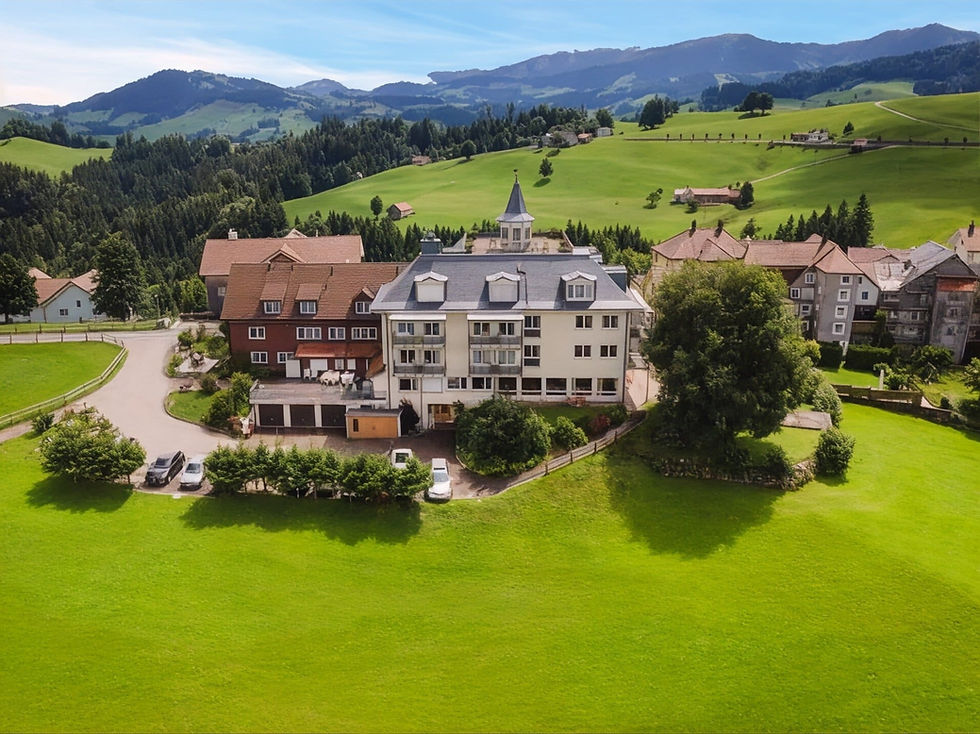
Institutional Source
BioMed Center Sonnenberg AG
Schwellbrunn, Switzerland